
Throughout history, the moon has inspired awe and reverence in cultures around the world. Its phases, light, and influence on nature have led to the creation of countless myths, with many cultures personifying the moon as gods or goddesses. These lunar deities, often associated with cycles of time, fertility, transformation, and magic, play key roles in shaping our understanding of the night sky and the natural world. In this blog, we’ll explore 10 of the most prominent moon gods and goddesses from different mythologies, each embodying unique qualities and cultural significance.
1. Chandra (Hinduism)
- Culture and Time Period: Ancient India, Vedic Period (~1500–500 BCE)
- Geographical Location: Indian subcontinent
- Religion: Hinduism, Vedic religion
- Main Beliefs:
Chandra is the god of the moon in Hindu mythology, associated with time, fertility, and the mind. He is often depicted riding a chariot across the night sky, drawn by ten white horses or an antelope. In Hinduism, Chandra is one of the Navagrahas (nine celestial gods) and is believed to influence human emotions and mental states, much like the moon’s phases impact the tides. He is also closely tied to fertility, as his moonbeams are thought to nourish plants and life. The moon god Chandra is linked to the cycles of time, particularly in Hindu astrology, where the moon governs one’s emotions and psychological well-being.

2. Selene (Greek Mythology)
- Culture and Time Period: Ancient Greece, Classical Period (~5th century BCE)
- Geographical Location: Greece
- Religion: Greek Mythology
- Main Beliefs:
Selene is the Greek goddess of the moon, often depicted driving her silver chariot across the night sky, pulled by two winged horses. She is the personification of the moon, representing its beauty, mystery, and cyclical nature. Selene was believed to illuminate the night, marking the passage of time and symbolising both life and death. Her powers were associated with fertility, change, and the lunar phases, which ancient Greeks thought influenced human life, agricultural cycles, and the tides.
Selene is one of two Greek goddesses attributed to the moon. Unlike Hecate, who is associated with darker magic and witchcraft, Selene personifies the moon itself and is more closely linked to the moon’s cyclical and life-giving qualities.
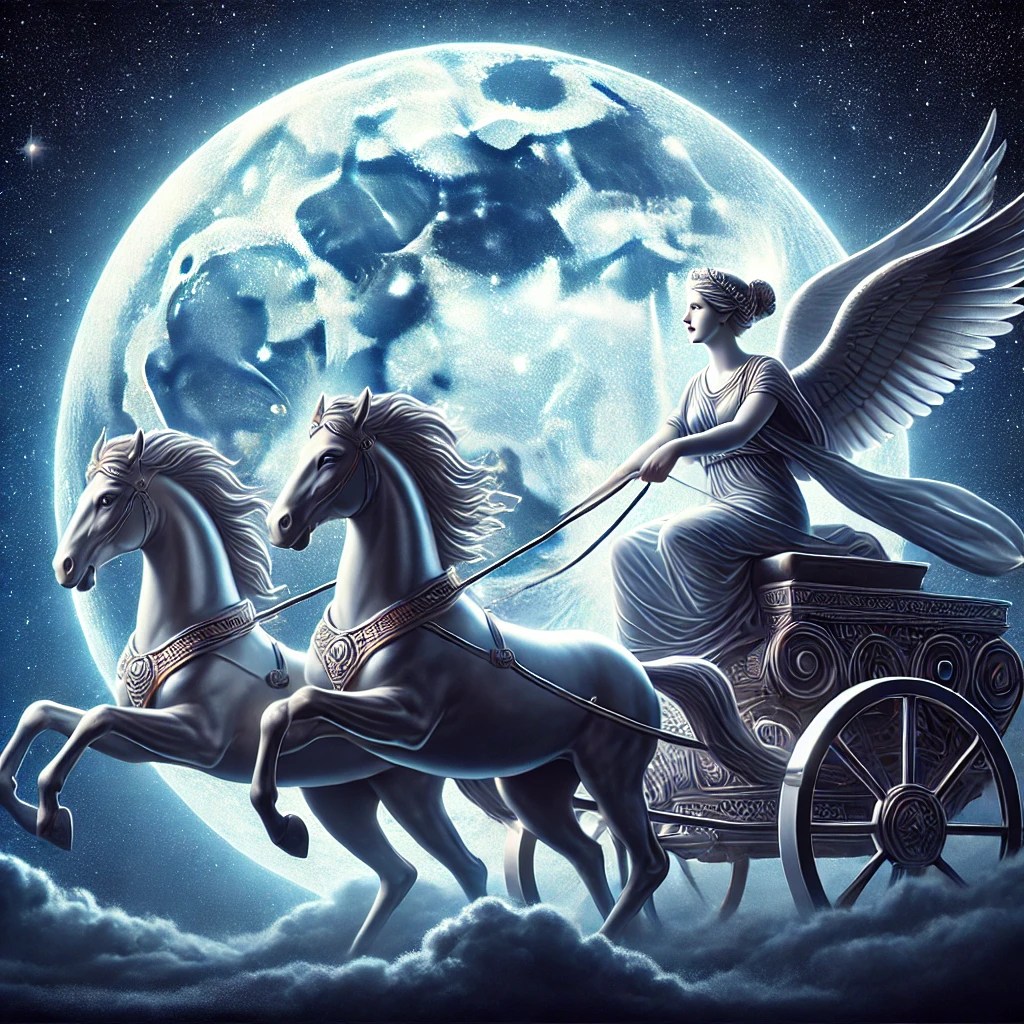
3. Tsukuyomi (Shinto, Japanese Mythology)
- Culture and Time Period: Ancient Japan, ~8th century CE
- Geographical Location: Japan
- Religion: Shinto
- Main Beliefs:
Tsukuyomi is the Shinto god of the moon and night. According to Japanese mythology, Tsukuyomi was born from the right eye of the creator god, Izanagi, and is the brother of Amaterasu, the sun goddess. Unlike other lunar deities, Tsukuyomi is male and is often viewed as a god of calmness and control over the chaos of the night. He is also associated with judgment and is often depicted with an air of mystery, especially after his estrangement from Amaterasu due to a dispute, symbolising the eternal separation of day and night.
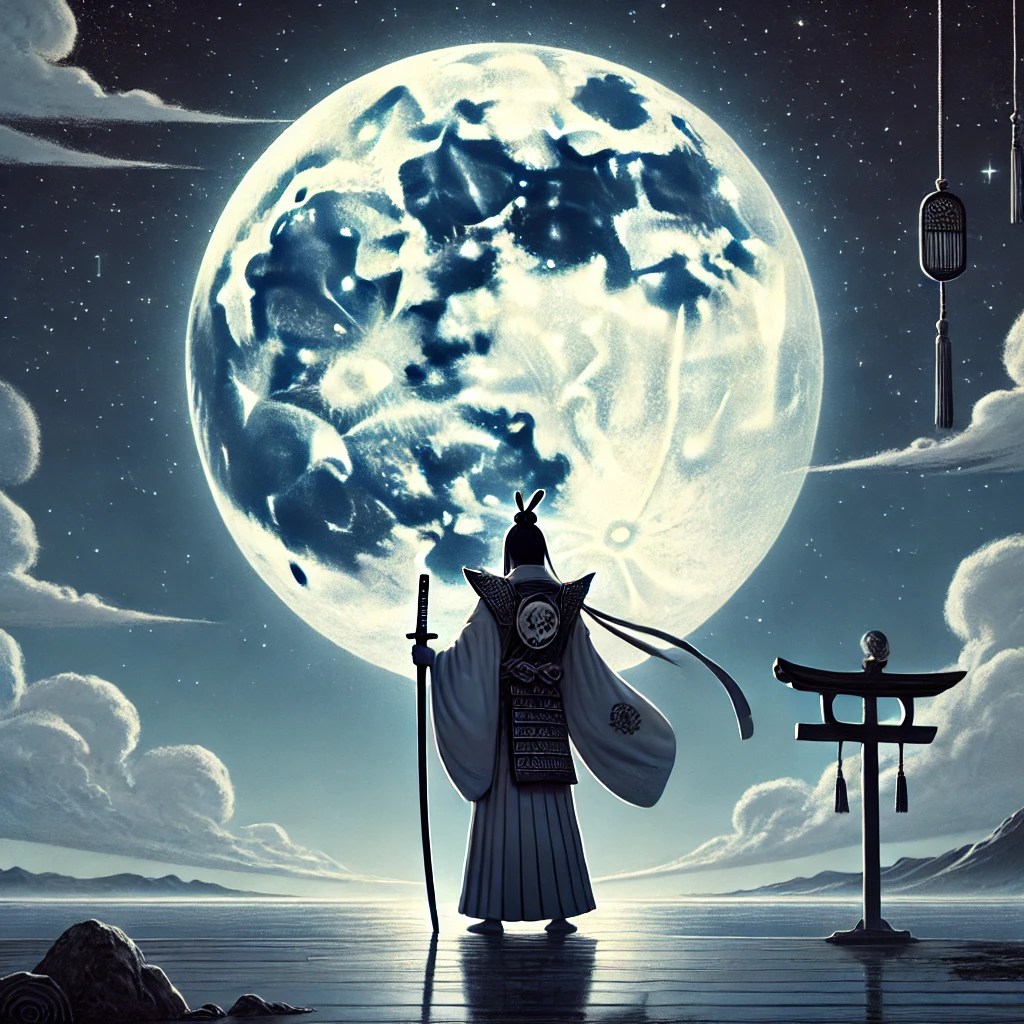
4. Máni (Norse Mythology)
- Culture and Time Period: Viking Age (~800–1050 CE)
- Geographical Location: Scandinavia
- Religion: Norse Mythology
- Main Beliefs:
In Norse mythology, Máni is the personification of the moon and is constantly pursued by the wolf Hati. He is the brother of Sól, the sun goddess, and together they represent the eternal chase of time across the sky. According to legend, during Ragnarök (the end of the world), Hati will eventually devour Máni. Máni is often associated with fate and the passage of time, as well as being a guardian of the night. He was believed to have power over the moon’s phases, which could control the tides and bring about change in nature and life.
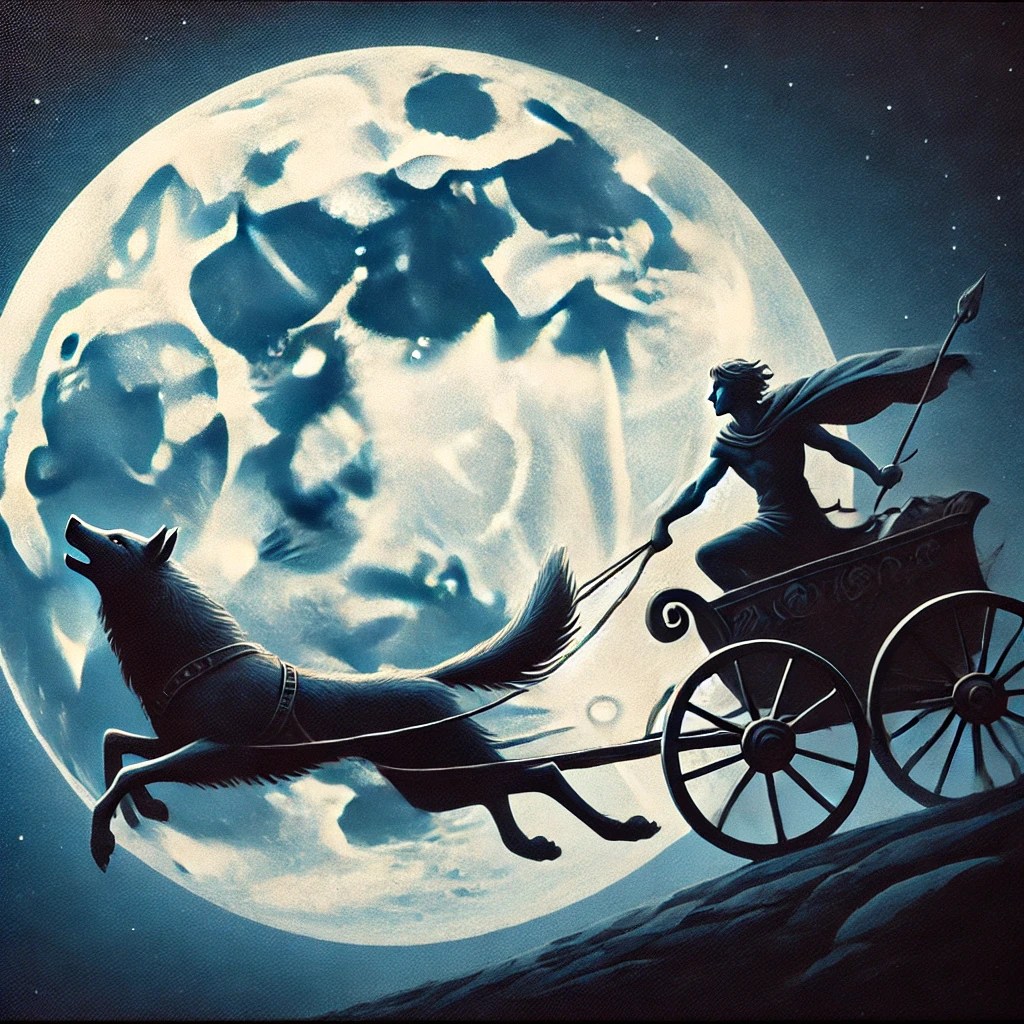
5. Coyolxauhqui (Aztec Mythology)
- Culture and Time Period: Pre-Columbian Aztec Empire (~1300–1521 CE)
- Geographical Location: Mesoamerica (modern-day Mexico)
- Religion: Aztec Mythology
- Main Beliefs:
Coyolxauhqui is the goddess of the moon in Aztec mythology. She is known for leading a rebellion against her mother, the Earth goddess Coatlicue, and being dismembered by her brother Huitzilopochtli, the sun god. Her body parts were scattered across the sky, symbolising the phases of the moon. Coyolxauhqui represents the duality of creation and destruction, as well as the cosmic struggle between light and darkness, embodying the chaotic and cyclical nature of the moon’s power in Aztec beliefs.
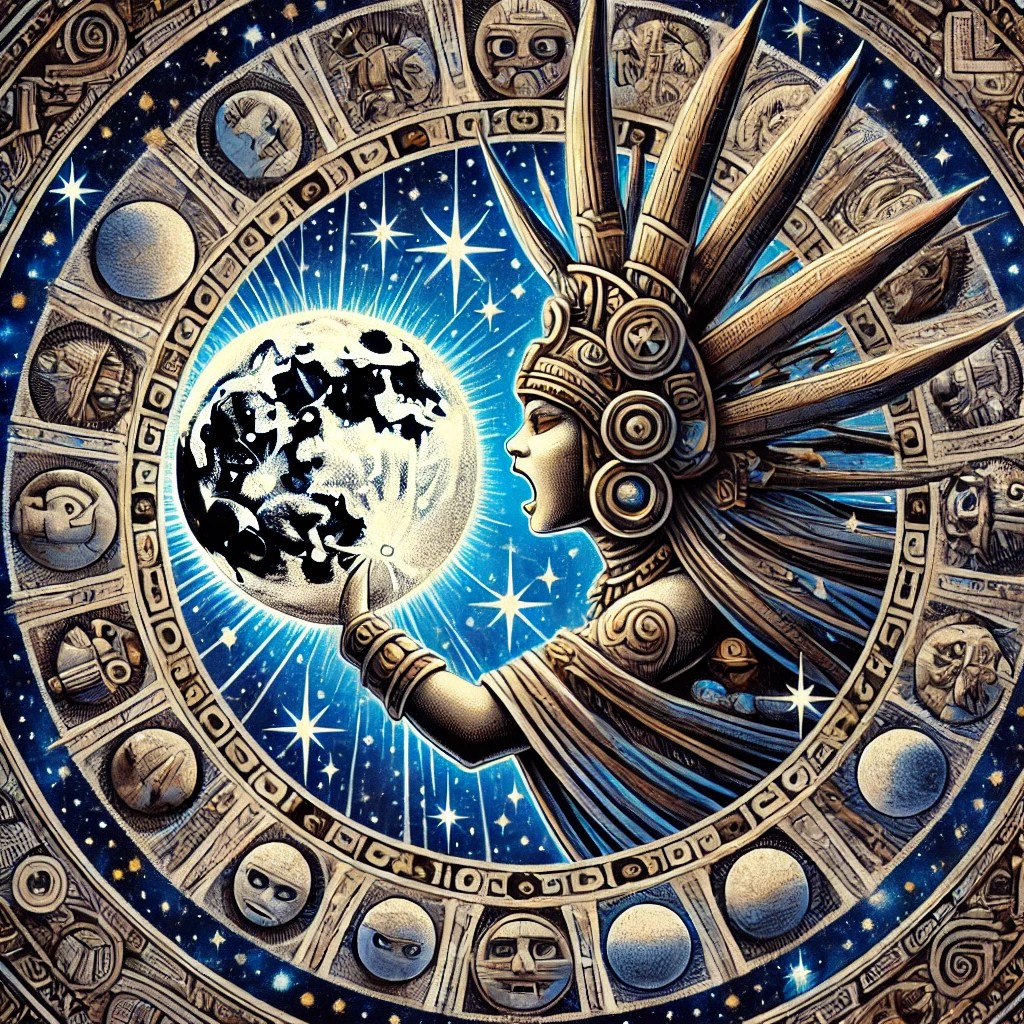
6. Khonsu (Egyptian Mythology)
- Culture and Time Period: Ancient Egypt, New Kingdom (~1550–1077 BCE)
- Geographical Location: Egypt
- Religion: Egyptian Mythology
- Main Beliefs:
Khonsu is the Egyptian god of the moon and time, often depicted as a young man with a sidelock of youth and the lunar disc on his head. He was associated with healing, protection, and fertility. Khonsu was believed to travel across the night sky, influencing time, fertility, and the tides, much like the moon itself. He was also thought to protect people from evil spirits during the night, making him a guardian of the dark hours.
Khonsu is one of two Egyptian gods associated with the moon. Unlike Thoth, who represents wisdom and writing, Khonsu is more directly associated with the moon’s protective and time-related qualities. Khonsu’s role in protecting the night contrasts with Thoth’s scholarly focus.

7. Hecate (Greek Mythology)
- Culture and Time Period: Ancient Greece, Classical Period (~5th century BCE)
- Geographical Location: Greece
- Religion: Greek Mythology
- Main Beliefs:
Hecate is a Greek goddess associated with the moon, magic, witchcraft, and the night. She is often depicted as a triple goddess, symbolising the three phases of the moon (waxing, full, and waning). Hecate is a goddess of crossroads, the underworld, and dark magic. She was believed to have the power to see both the past and the future, guiding souls in the night and protecting them from harm. In some traditions, she is associated with the waning moon and represents the darker, hidden aspects of life and death.
Unlike Selene, who personifies the moon itself, Hecate’s association with the moon is more esoteric, focusing on its connection to magic, the occult, and the underworld.

8. Artemis (Greek Mythology)
- Culture and Time Period: Ancient Greece, Classical Period (~5th century BCE)
- Geographical Location: Greece
- Religion: Greek Mythology
- Main Beliefs:
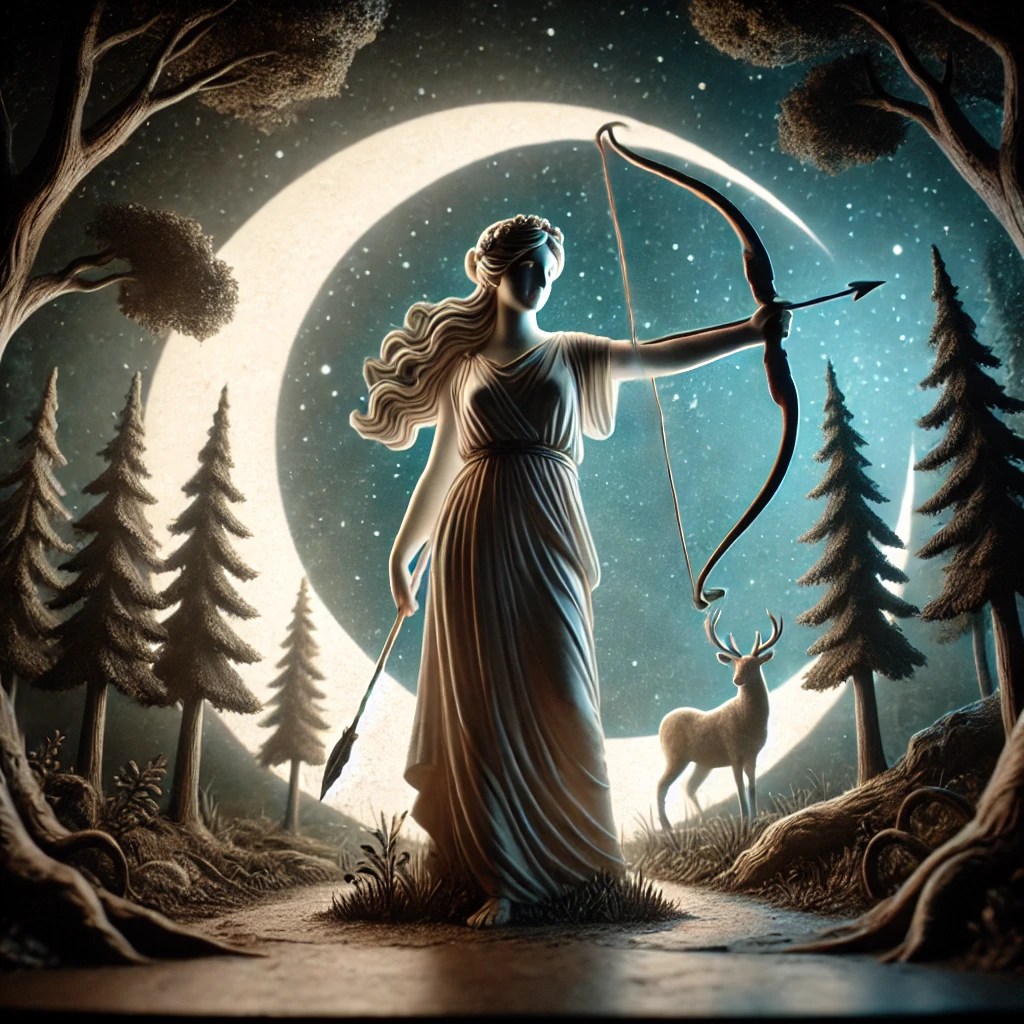
Artemis, though primarily known as the goddess of the hunt, is also closely associated with the moon. She is often depicted alongside the crescent moon, representing her connection to nature, fertility, and wild animals. Artemis is seen as a protector of women, particularly during childbirth, and her association with the moon reflects the cycles of life and the changing phases of womanhood. Her twin brother, Apollo, is associated with the sun, symbolising the duality of day and night.
Unlike Hecate, Artemis’s connection to the moon is more physical, linked to nature, fertility, and the rhythms of the natural world, rather than magic or the underworld.
9. Thoth (Egyptian Mythology)
- Culture and Time Period: Ancient Egypt, Old Kingdom (~2686–2181 BCE)
- Geographical Location: Egypt
- Religion: Egyptian Mythology
- Main Beliefs:
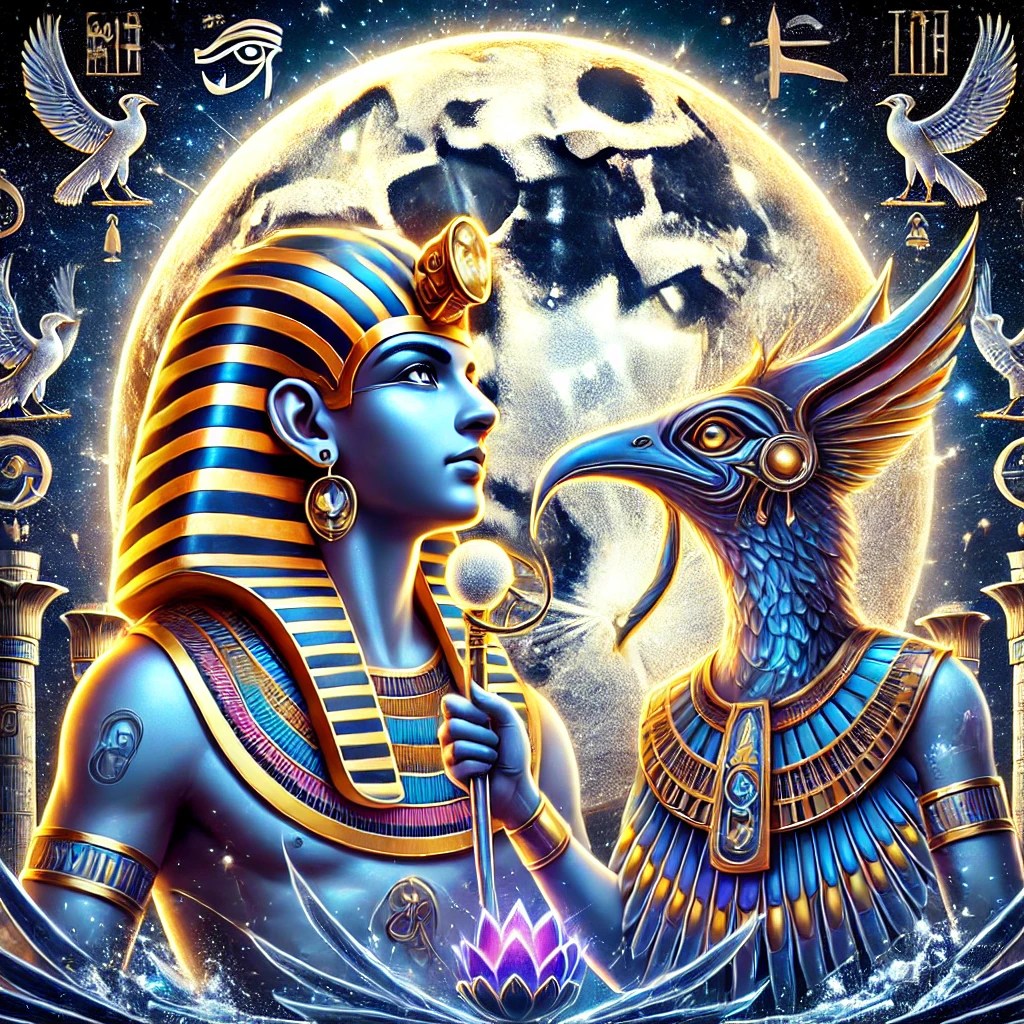
Thoth is the Egyptian god of the moon, writing, knowledge, and wisdom. He is often depicted with the head of an ibis and a lunar disc. As the god of knowledge and writing, Thoth was believed to have created the 365-day calendar by using his knowledge of the moon’s cycles. Thoth was also responsible for maintaining balance and order in the universe, ensuring that both the moon and sun followed their courses. He was a deity of science, magic, and writing, making him a key figure in Egyptian cosmology. - Thoth is one of two Egyptian gods associated with the moon. Unlike Khonsu, who is connected with the physical aspects of the moon, such as time and protection during the night, Thoth represents the intellectual and metaphysical qualities of the moon. Thoth’s focus is on wisdom, writing, and the balance of cosmic order, as well as using the cycles of the moon for knowledge and maintaining the universe’s structure. His lunar connection is more about enlightenment and understanding, in contrast to Khonsu’s role as a protector and guide during the night.

10. Arianrhod (Celtic Mythology)
- Culture and Time Period: Iron Age (~500 BCE to 43 CE)
- Geographical Location: Wales, Britain
- Religion: Celtic Mythology
- Main Beliefs:
Arianrhod is a Welsh goddess associated with the moon, fertility, and the stars. She is often depicted as a figure of beauty and transformation, linked to the silver wheel of the moon, which symbolises the cycles of life and death. In Celtic mythology, Arianrhod is connected to the mystical isle of the dead and represents both the power of renewal and the mystery of the afterlife. Her silver wheel, the Caer Arianrhod, was believed to transport souls to the afterlife, further connecting her with the moon’s role in the cycles of life.

Final Thoughts
Across different cultures and time periods, the moon has often been personified as a deity, and certain common themes emerge from these depictions. Many moon gods and goddesses are tied to the concepts of time, fertility, and cycles, representing the moon’s visible waxing and waning. For instance, Chandra and Selene both reflect the moon’s life-giving qualities and its impact on agricultural and human cycles, while gods like Máni and Khonsu are closely connected to the moon’s role in controlling the passage of time.
Interestingly, the moon is often seen as feminine, with moon goddesses like Selene, Artemis, and Arianrhod outnumbering moon gods in many traditions. This may be due to the moon’s link to fertility and the menstrual cycle, which follows a similar 28-day rhythm. The moon’s gentle, reflective light, often seen as nurturing and protective, contrasts with the sun’s more aggressive, direct light, further contributing to its association with femininity.
That said, there are also prominent male moon gods, such as Tsukuyomi and Máni, showing that cultural perceptions of the moon can vary greatly. In some traditions, the moon is not seen as nurturing but as a force of power, judgment, and control over the night.
Ultimately, whether depicted as gods or goddesses, the moon’s symbolism consistently revolves around its role as a mediator between light and darkness, and its influence on the tides, time, and transformation. Its power is not only over the physical world but also the metaphysical, influencing emotions, dreams, and, in many cases, the human psyche itself.
While many cultures personified the moon as a god or goddess, others viewed it through a different lens. If you’re interested in learning how some societies saw the moon as more than just a deity, check out my blog post on The Moon Beyond Myth: Cultures that Saw the Moon as More Than a Deity [coming soon].
And if you want to dive deeper into the moon’s symbolism as a force of transformation and madness, read my post The Moon: Symbol of Transformation and Madness here.
 Home
Home 
Leave a comment